Mission Statement: To create an artistic community. Art does not only add to a community but a community can also add to art. Our goal is to support that cycle.
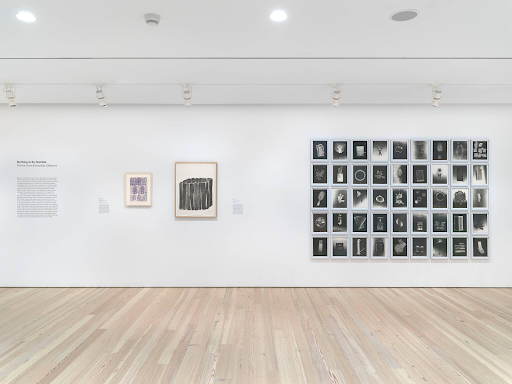
My proposal for an art-space is one in response to the “white cube” gallery. You probably know which one I’m talking about, the large square white room with concrete floors and three artworks in a 800sqft space. Popularized in the 1900s, the white cube was seen as a way to optimize the viewer’s art experience, since the limited space would eliminate distractions like colorful or crowded walls. The blank room has since become the standard, with some deviation in wall color, or words, but overall, the influence of the white cube can be seen in most exhibition spaces today.
In my opinion, the minimalist urge to remove all distractions (which I would redefine as contexts) and let art exist in an empty void on its own supports a culture of elitism, where only the most important art has the right to be on display. I hate this modernist’s void; it comes off as harsh, sterile, and unwelcoming. So, I propose something a little more “distracting”. I propose an exhibition space that tries to respond to issues of comfort, community, and care that I see many museums and exhibitions lacking in their variations of white-cubes. I propose the Egalitarian Exhibition.1

First: The Walls
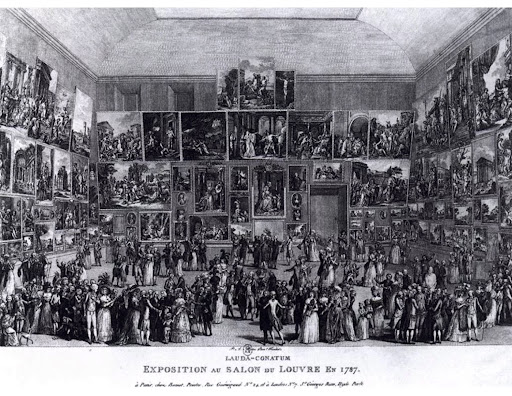
In an Artsy article that I footnoted on page one, there is a fascinating image of a 1787 exhibition room at the Louvre which I have included below. Acknowledging the imperialist history of the Louvre’s collection, I think inspiration can be taken from this style of display to show that sparse walls have not always been the standard in public exhibition. I hope the image inspires a sort of giddy reinvigoration of potential to curators that look out at a blank wall and currently only see space for a single frame.
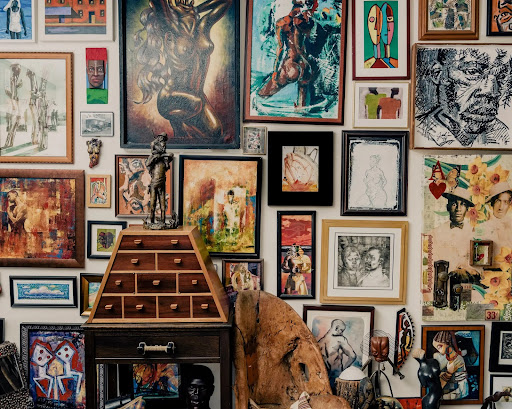
In the Egalitarian Exhibition, every wall may be covered in art, brimming with pieces until none of the original wallpaper behind is seen. For reference, below is the home of Chicago resident, Patrick McCoy. In a NYT article (which I highly recommend checking out), McCoy shares photos of his home and the 1300 odd artworks he has collected over the years, each piece of which he appreciates individually.
McCoy’s mindset on the collection resonates a lot with the issues I hope to combat with my own exhibition: “There are so many different prejudices in the American scene that keep people from thinking of themselves as art collectors. We have been told through the media that you have to be super wealthy.” He continues, “That you have to be private, that you acquire things and you squirrel them away. And what you hear everywhere is that you have to know something about art, and that is such a bunch of malarkey. All you have to do is look at something and say, “I like that, and I want to buy it,” and then you’re an art collector.”
Second: The Artists and Their Art
The demand for chaotically covered, overflowing walls of art may lead you to ask something along the lines of: where will you get the art? or what art are you planning to display?
For me, another issue with the traditional museum space is its focus on the tourist. Drawing outsiders with old, “high-profile” pieces, in my opinion, does very little to create an art community. So, to contribute to building an artistic community, my exhibition will be made up of art pieces from local artists with no demands for particular styles or “qualities” of the art. The one caveat will be a requirement that the art be respectful and empathetic to everyone and not incite or support discrimination or harm of any type.
This idea is largely based on the current structure of AS220, which I found inspiring and intriguing. However, in a meeting with one of the members of AS220 it was mentioned that the waitlist for their local artists is years long, which I think could be fixed by reassigning the “usable” space on a wall. (Note the space doesn’t have to be filled, the space is for the artists. Empty patches are fine, what is important is that every artist gets to display their work.) Each artist should be able to offer a preference of where they want their art to rest. This would include particular wall themes and applications for reserving group shows on certain walls. Group shows would be able to decide on their own how the art is arranged on the wall, but a minimum number of artworks may need to be put in place. On the more general walls, layers of art will also be on weekly rotations, meaning the artwork closest to the ceiling one week will eventually be moved to eye/arm level another week.
Third: Buying and Giving Art
Another divergence from AS220’s structure is the difference in our missions. AS220’s mission statement outlines an emphasis on mostly providing artists a space to showcase their art, but I also hope to divert equal attention to the experience of the audience.
One particular part of the unwelcoming museum atmosphere that I hope to dispel is the feeling of separation between the audience and the art. What I intend to create is a program in the exhibition, where every piece of art on display has been purchased by the exhibition2 and is totally removable. This means that a viewer could see a piece of artwork on the wall that really resonates with them, take it off the wall, and bring it home to enjoy in their kitchen or bedroom, anywhere they feel most comfortable with the piece. Think of it as a library for art without a return date. People are encouraged to borrow art for as long as they would like, with the request that they take care of it.
The goal is to create a more tangible, lasting impact on someone’s life in more individual and personal ways. Oftentimes, a museum’s biggest fear is theft or damage, but this exhibition acknowledges that fear of theft also communicates distrust and a power imbalances between an owner and guest. There are no security guards in this space, no cameras, no tape squares on the floor to keep people from getting too close. There are also no guests in this exhibition; everyone is equally entitled to the art.
Fourth: Eating, Drinking, and Sitting
While people can take the art with them wherever they feel most comfortable, I hope to make the exhibition a place that can also provide some level of comfort. This would include a small cafe, where people can get reasonably priced food and drinks to enjoy and relax while they observe the art. The space should also never be cube shaped, it should have many curves and corners and private alcoves for people to sit alone in peace (ensuring that all corners are large enough for a wheelchair or other mobility device to comfortably enter and exit). Lighting should be bright but not harsh and lighting can differ in different parts of the exhibition. What matters here is variability so as many people as possible can find some form of exhibition setting that they will truly enjoy.
On the note of variability, I am brought to the seats:
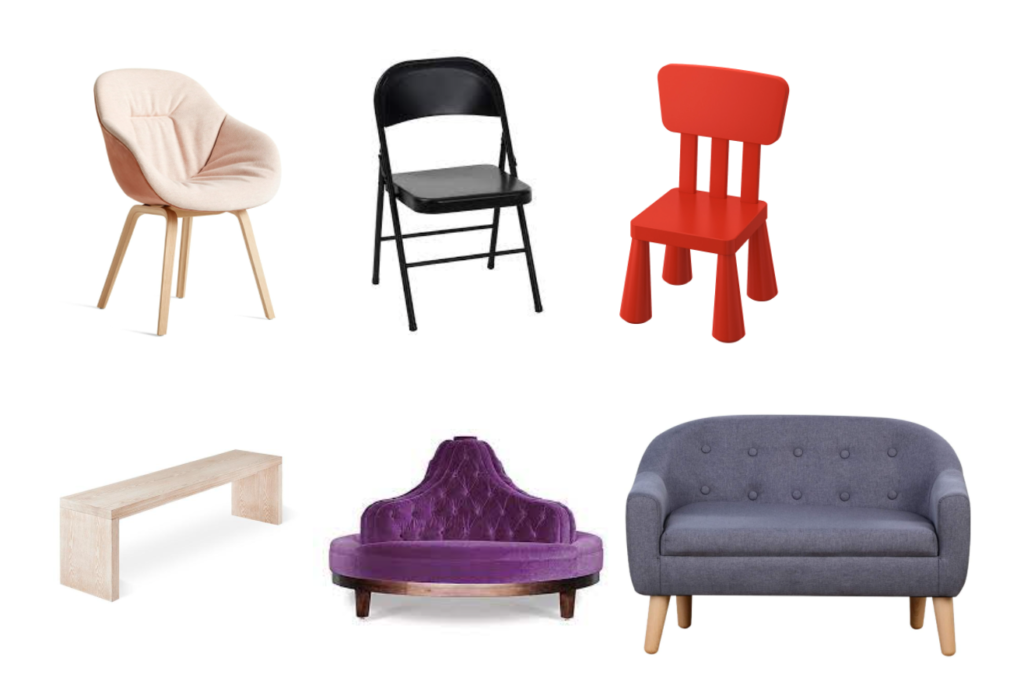
While a dining/larger table can have four of the same chair, for the most part, every piece of furniture should be different. Many people have sensory preferences, and this eccentricity could contribute to versatility of meeting needs. Some chairs can be positioned far from the work, while others may be right next to it. Some chairs can also be moveable. Whatever makes the most comfortable view.
Art boards and drawing desks should also be on hand for any visiting artists to enjoy and take inspiration from other art they see.
Conclusion
With all of that said, this exhibition likely seems completely unrealistic, and it is. I could try setting up something like this in downtown Providence, but there is no guarantee people would actually enjoy the space, and every likelihood that it would fail. However, I hope the concepts behind it resonate or at least challenge you to question the real purposes of art exhibitions and the worship of an artistic elite that have become expected from the art world today. For example, a more modest suggestion of this exhibition would be solely an art library, including residential memberships and rental due dates.
Unanswered queries/things to consider:
- How to sustain this exhibition financially
- How to build an art space in a community that may enjoy it without treating the exhibition as “bettering” the community or inviting gentrification.
- How to tackle the treatment of the exhibition space as something I control/own instead of something stolen from Native Americans.
1 Term “Egalitarian Exhibition” inspired by NYT’s article “Egalitarian Collection”
2 Each artist that agrees to this type of removable exhibition will be compensated for all materials used in the making of their art, plus $20 an hour for whatever time demands they have spent on the work, and an extra $500 as acknowledgement of the creative inspiration and circumstances in which only they could create this work. These numbers should be adjusted accordingly for inflation and community specific expenses if this exhibition continues to some unknown time and place. There should also be a pre-emptive art fund for people that cannot afford materials or time without money in advance.
