In 2016, Maia Chao and Josephine Devanbu launched Look at Art. Get Paid. at the RISD Museum.
Look at Art. Get Paid. (LAAGP) is a socially engaged art project that pays people who don’t visit art museums to visit one as guest critics of the art and its institution.
from the website
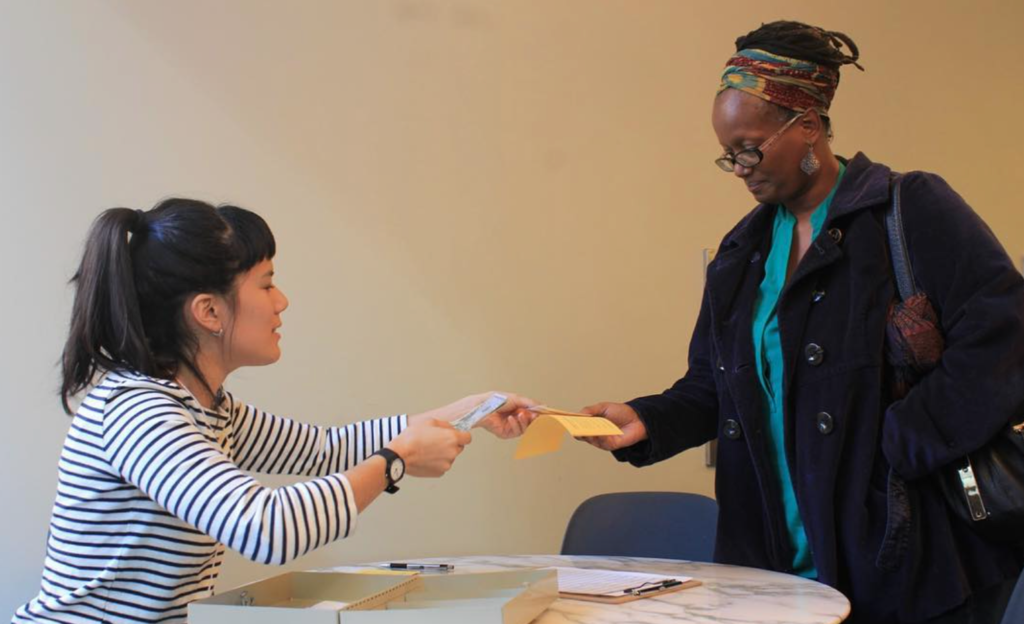
Guest critics were paid cash payments to compensate them for their time, feedback, and emotional labor in visiting this historically white space. Critics provided feedback about the museum, often noting feelings of surveillance, discomfort with implicit behavioral codes of conduct, and the lack of representation in the art collection.
By paying people to engage in an activity commonly considered leisure, we call out the emotional labor and risk of entering an institution built to center white and affluent visitors. Compensation also recognizes the intellectual labor of voicing one’s honest opinion—even when it runs counter to the institution’s authority.
Critique is a hallmark of the art field. Yet, the vast majority of paid cultural critics, curators, museum leaders, and museum visitors are white and affluent. In a world that systematically amplifies these voices and silences others, what possibilities and truths are we missing? We believe that the very people whose vision is most needed to help reimagine and reconfigure these spaces shouldn’t be expected to donate their time or assimilate in order to get a seat at the table.
Maia Chao and Josephine Devanbu for the RISD Museum
We invited Maia Chao, co-creator of LAAGP and a Brown alum, to discuss the project, its outcomes, and its implications for the future of museums and similar cultural institutions. For Maia, the project was about centering the lived experiences of community members who typically do not have the privilege of being comfortable in these spaces. Maia highlighted common feedback from the critics.
The critics offered powerful accounts of what the museum looked and felt like for a newcomer. They commented on: the vast collection of objects presented as art; the silence and stillness of the galleries; the desire to touch the art; the minimal interaction between strangers viewing artworks; the presence of the guards—some noted approachability while others expressed intimidation; the “proper” dress and restrained manner of other visitors; the lack of “inner city” visitors and artists of color; the evident cost and high quality of the building and collection; surveillance cameras; lack of advertisements in their neighborhood; lack of Spanish labels or guides; lack of proper signage to invite the public into the space; difficulty engaging with contemporary art.
from the website
During our conversation, Maia noted the importance of language in addressing the guests as “critics,” ascribing them the power of voicing their own opinions, even if they ran counter to the institution’s—a power that is typically only afforded to white writers. Maia also discussed the process of promoting the project to the larger Providence community, which included posting signage in public spaces primarily in communities of color and working-class communities to invite them into the space.
Much of our discussion centered on the outcomes of the project, which included an all-staff dialogue at the Museum, along with creative interventions that were collaborations between museum staff, guest critics, and local practitioners. Since then, changes have been made, including providing more multilingual material, addressing the racial composition of the staff, and continuing to think through questions of what it means to center the needs of visitors. As one guest critic noted, the Museum seemed to be “taking better care of the paintings than of us.”
While LAAGP is no longer active, we hope that the conversations that the project brought up continue to shape our reimagining of museum spaces.
Over the course of 2020-21, we found our lives and circumstances deeply transformed on many fronts, and concluded our work together as Look at Art. Get Paid. We are keeping this website available as an archive and hope that Look at Art. Get Paid. can serve as a model for equitable community-centered feedback processes and institutional transformation. We want to express our deepest thanks to all who have supported the growth of this project from a small student-led experiment to a government-sponsored program. Please check out this list of resources to follow some of our comrades doing related work. You can follow our current independent work here: Maia & Josephine (link forthcoming).
from the website
